

- INTRODUCTION
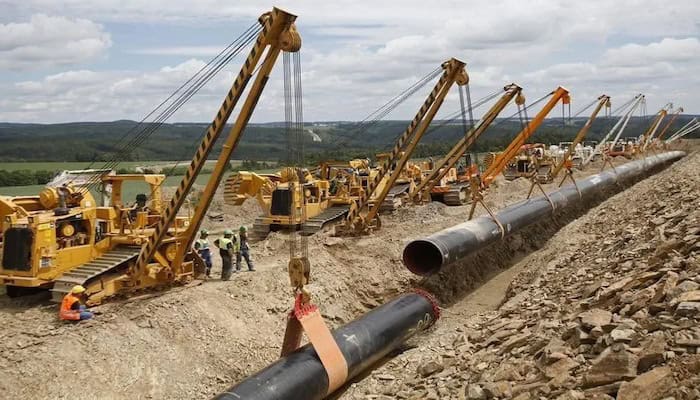
In a press release of April 30th, The Nigerian National Petroleum Company (NNPC) Limited announced the strategic completion of the River Niger Crossing of the 130km Obiafu-Obrikom-Oben (OB3) gas pipeline, marking a major milestone in the expansion of Nigeria’s national gas transmission network.
This significant development comes after the Ajaokuta- Kaduna-Kano (AKK) Gas Pipeline River Niger Crossing announced in June 2025.
- THE OB3 GAS LINE PROJECT
The OB3 pipeline runs from the Obiafu/Obrikom gas area in Rivers State to Oben in Edo State, crossing beneath the River Niger along its route. Thus, making it a 130km Obiafu-Obrikom-Oben Crossing.
The Crossing was completed by NNPC through its subsidiary, NNPC Gas Infrastructure Company in April 2026.
The OB3 pipeline is designed to transport up to 2 billion standard cubic feet (Bscf) of gas per day. Completion of the crossing is expected to unlock more than 500 million standard cubic feet per day of additional domestic gas supply, supporting power generation, industry, and exports.
Engineers installed the pipeline approximately 2 km beneath the River Niger riverbed using Horizontal Directional Drilling (HDD) technology, a trenchless construction method used for difficult river crossings.
- THE EFFECTS OF THE OB3 GAS PIPELINE
The crossing removed a major bottleneck that had delayed full completion of the OB3 project for years.
The successful crossing unlocks the full potential of the OB3 Pipeline, a strategic infrastructure designed to transport up to 2 billion standard cubic feet of gas per day, significantly strengthening energy availability, enhancing supply reliability, and accelerating national economic development.
Executed approximately two kilometres beneath the River Niger riverbed, the technically complex crossing was delivered by the NNPC project team working with PCE Nig Limited through the use of Advanced Horizontal Directional Drilling (HDD) Technology
Advanced Horizontal Directional Drilling (HDD) is a trenchless construction technique used to install pipelines, cables, and conduits underground without digging a continuous open trench. It is especially useful for crossing obstacles such as rivers, highways, railways, environmentally sensitive areas, and urban developments.
With this, there is minimal environmental disturbance, reduced impact on traffic and communities and the ability to install pipelines beneath sensitive ecosystems.
- STRATEGIC IMPORTANCE OF THE OB3 GAS PIPELINE PROJECT
The OB3 Gas Pipeline is one of Nigeria’s most important gas infrastructure projects. Designed to transport natural gas from the eastern Niger Delta region to western and northern demand centers, the project plays a critical role in strengthening the Country’s energy security, industrial development, and economic growth by:
1. Expanding National Gas Transmission Connectivity
The River Niger crossing enables full integration of Nigeria’s east-west gas transmission system and strengthens connectivity with other national gas infrastructure projects, including the Ajaokuta–Kaduna–Kano (AKK) Pipeline. This is expected to improve gas supply reliability, support industrial growth, and expand electricity generation capacity across Nigeria. This connectivity allows gas resources from the eastern producing fields to be transported efficiently to regions with high demand, reducing bottlenecks and improving supply reliability.
2. Power Generation Support
Natural gas is the primary fuel for many of Nigeria’s thermal power plants. By increasing the availability and reliability of gas supply, the OB3 Gas Pipeline helps improve electricity generation capacity, reduce power shortages, and support the stability of the national grid.
3. Promoting Industrial Development
The pipeline provides a dependable source of natural gas for industries such as:
- Fertilizer production
- Petrochemicals
- Cement manufacturing
- Steel production
- Food processing
Reliable gas supply lowers production costs and encourages industrial expansion, contributing to economic diversification and job creation.
- Reducing Gas Flaring
Nigeria has historically experienced significant gas flaring due to inadequate gas transportation infrastructure. The OB3 project enables greater utilization of associated gas that would otherwise be flared, supporting environmental sustainability and helping the country meet emissions-reduction objectives.
- Strengthening Energy Security
The pipeline improves the flexibility and resilience of Nigeria’s gas supply system by allowing gas to be transported across regions. This reduces dependence on localized supply sources and enhances the country’s ability to respond to supply disruptions.
6. Supporting the Nigerian Gas Master Plan
The OB3 pipeline is a key component of Nigeria’s gas infrastructure development strategy and aligns with national objectives to increase domestic gas utilization, expand industrialization, and transition toward a gas-based economy.
7. Facilitating Economic Growth and Investment
The availability of reliable gas infrastructure attracts investment in:
- Power generation projects
- Industrial parks
- Manufacturing facilities
- Gas-based industries
- Export-oriented energy projects
Improved infrastructure reduces investment risks and enhances Nigeria’s attractiveness as an energy investment destination.
8. Increasing Revenue Generation
By enabling greater commercialization of natural gas resources, the OB3 project contributes to increased government revenues through:
- Gas sales
- Royalties
- Taxes
- Industrial development
- Export opportunities
#oil and gas# #Energy# #OB3GasProject# #Nigeriaoilandgassector# #Energynewsinnigeria# #NNPC#olandpartners#